How federal interest rate increases affect savings, loans and mortgages
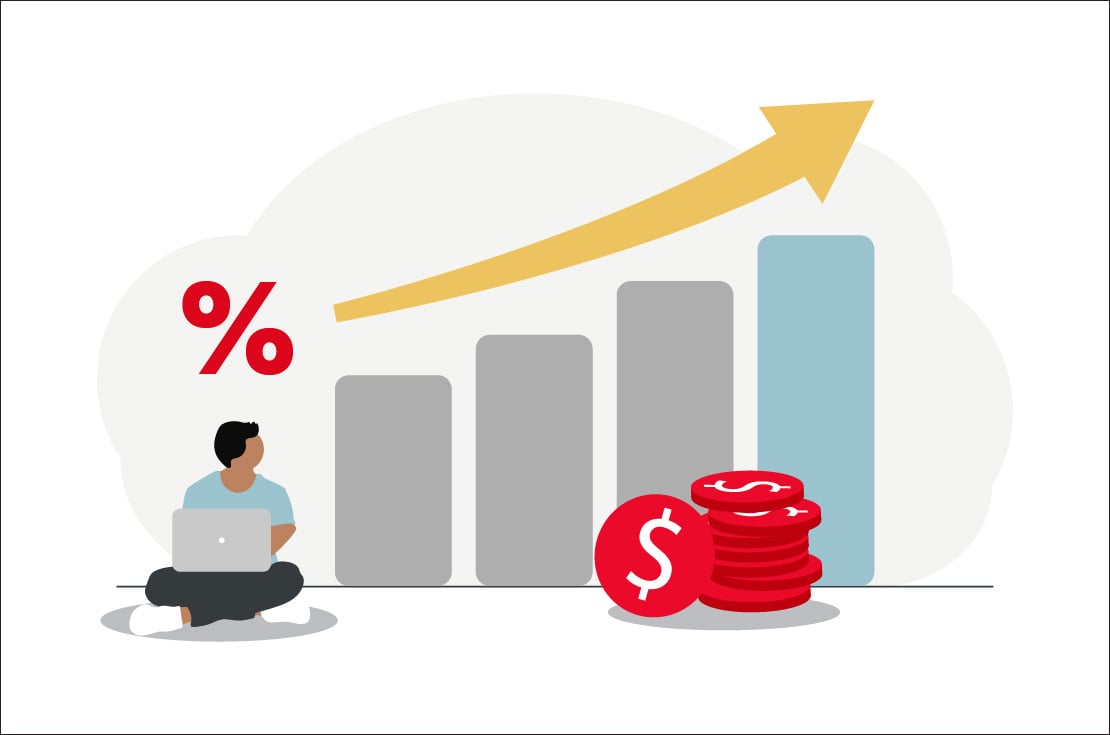
When the Federal Reserve raises interest rates, it influences borrowing and saving across the economy. These changes can affect everything from credit cards and mortgages to savings accounts and certificates of deposit (CDs).
Understanding how rising interest rates impact your finances can help you make informed financial decisions, whether you're saving for the future, managing debt or planning a major purchase.
What does it mean when interest rates are increased?
The action of increasing interest rates involves raising the Federal Funds Rate, which is the rate banks charge each other when lending money overnight to meet the Federal Reserve requirement. This is important because the target rate acts as a benchmark for a wide range of other interest rates.
Why does the Federal Reserve raise interest rates?
The Federal Reserve uses interest rates as one of its tools to manage inflation and maximize employment. Increasing rates can reduce spending across the economy. Higher borrowing costs may lead consumers and businesses to spend more cautiously, helping ease inflationary pressures over time.
How do interest rate increases affect savings?
Higher interest rates can create opportunities for savers. Depending on market conditions, savings accounts, money market accounts and certificates of deposit (CDs) may offer increased earnings, helping consumers grow their savings over time.
How do interest rate increases affect loans?
Higher interest rates typically make borrowing more expensive. Variable-rate products, such as credit cards, may become more costly and monthly payments on new loans may be higher.
How do interest rate increases affect mortgage rates?
Mortgage rates don't always change in response to changes in the Federal Funds rate. They're influenced by several factors, including inflation expectations, economic conditions and bond markets. For prospective homebuyers, it's important to focus on affordability, budget and long-term financial goals rather than trying to perfectly time the market.
What should you do when interest rates rise?
Interest rate changes are a normal part of the economic cycle and a rate increase does not necessarily require major financial changes.
Instead, consider taking a few proactive steps:
- Review any variable-rate debt.
- Revisit your monthly budget.
- Look for opportunities to strengthen your savings.
- Evaluate whether higher-yield savings products align with your goals.
- Stay focused on your long-term financial plan.
The bottom line
Federal Reserve rate increases can create challenges for borrowers but also provide opportunities for savers. Whether you're saving for the future, managing debt or preparing for a major purchase, understanding how interest rates affect your finances can help you make informed decisions and achieve your financial goals.
Have questions about how rising rates affect your savings or loans? Our bankers can help you evaluate your options and make a plan tailored to your goals.
This article is for educational purposes only and is not intended to be financial, investment, legal or tax advice. Always consult a qualified professional about your personal situation.
More articles from our Learning Center:
How federal interest rate increases affect savings, loans and mortgages
How to budget for back-to-school
How to pay off debt
Paying down debt is one of the most effective ways to strengthen your financial future. Each payment you make helps reduce your balance and paying extra can reduce the interest you’ll pay over time. With a clear plan and consistent habits, managing and reducing debt becomes more achievable.
How to set savings goals
Saving money starts with a clear plan. Setting defined goals gives your money direction, keeps you motivated and helps you track your progress. Whether you’re preparing for something soon or planning ahead, a savings strategy can support your goals.
Simple ways to save